
Speakers
Our esteemed speakers play a pivotal role in shaping the overall success of the event. The organising committee diligently selects individuals based on their extensive experience, expertise, knowledge, and ability to captivate and inspire the audience.
Our speakers come from diverse backgrounds within the field, offering a rich array of insights. Please see our list of confirmed speakers below, and stay tuned for details on their presentations, which will be made available on the program page once unveiled.
Invited Speakers
-
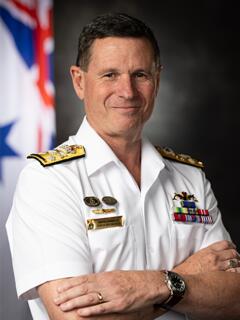
VADM Mark Hammond, AO, RAN
Chief of Navy
Vice Admiral (VADM) Mark Hammond AO RAN joined the RAN in 1986 as an electronics technician before commissioning as a naval officer in 1988. Graduating from the Australian Defence Force Academy (ADFA) in 1990, VADM Hammond served in frigates before volunteering for submarine service and qualifying in the Oberon Class. He is a dual qualified officer, graduating from the RAN Principal Warfare Officers Course, the Netherlands and United States Navy Submarine Command courses, and Australia's Senior Submariner.
VADM Hammond served extensively in Collins Class submarines. He also gained international experience in French, British and US nuclear attack submarines and Dutch conventional submarines. His Command of HMAS Farncomb included submarine operations across the Indo-Pacific. Subsequent shore postings included the Assistant Naval Attaché in Washington DC, Submarine Capability and Joint Exercise Staff roles, and 12 months as the Chief of Staff to the Chief of the Defence Force.
On promotion to Commodore, VADM Hammond was appointed Director General Maritime Operations. He then returned to the United States as the liaison officer to the chairman of the US Joint Chiefs of Staff. He was awarded the United States Legion of Merit (Officer) for his performance in this role and, in 2018, was appointed a Member of the Order of Australia (AM) for exceptional service to the Australian Defence Force in senior command and staff roles.
On promotion to Rear Admiral, VADM Hammond assumed duties as the Deputy Chief of Navy in 2018, and in late 2020, was appointed Commander of the Australian Fleet. In these demanding appointments, VADM Hammond first oversaw substantial workforce growth. He then focused on enhancing the resilience and warfighting capability of Navy's people and Fleet during the COVID19 pandemic.
VADM Hammond assumed Command as Chief of Navy on 7 July 2022. He is the first RAN Recruit School and ADFA graduate to do so, and only the second submarine commanding officer to be appointed to the role. In 2023, he was appointed an Officer of the Order of Australia (AO) for distinguished service to the Royal Australian Navy in senior command roles. In April 2024, he was awarded the Republic of Korea's Order of National Security Merit Gukseon Medal for outstanding and meritorious services rendered to the Republic of Korea. In October 2024, VADM Hammond was honoured with the Republic of Singapore's Meritorious Service Medal – Military (Pingat Jasa Gemilang – Tentera) for exceptionally distinguished performance in furthering links between Australia and Singapore.
VADM Hammond holds a Bachelor of Science, Master of Management, Master of Maritime Studies and is a graduate of the Harvard Business School Advanced Management Program.
Away from Navy, VADM Hammond's interests include antique wooden boats, cricket, rugby league (South Sydney Rabbitohs), AFL (Port Adelaide), chess and submarine warfare in World War II. He is the Australian Patron of the Australia–America Veterans Association.
-
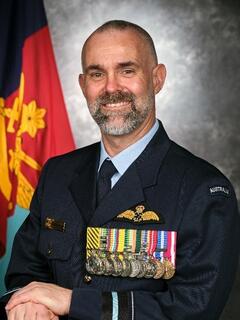
AVM Jason Begley, CSM
First Assistant Director-General Expeditionary & Transnational Intelligence - Australian Signals Directorate
Air Vice-Marshal Begley joined the Royal Australian Air Force through the Australian Defence Force Academy in 1991. He completed a Bachelor of Arts degree with Honours in Politics followed by Navigator training at RAAF East Sale.
Air Vice-Marshal Begley converted to the P-3C Orion in 1996. His flying career includes multiple postings to No 10 Squadron and 92 Wing Development Flight, resulting in around 4500 airborne hours. His appointments at those units included a specialist aircrew role as Electronic Warfare Training Officer, Executive Officer 92 Wing Development Flight, and Commanding Officer No 10 Squadron.
Air Vice-Marshal Begley fulfilled several capability roles through his career. As a Squadron Leader he was the responsible officer in Capability Development Group for the joint project that including the acquisition of Air Force's two AP-3C(EW) aircraft. As a Wing Commander in Air Force Headquarters he was responsible for managing the E-7A Wedgetail and Jindalee Operational Radar Network capabilities, and initiated the MC-55A and AIR6500 projects. In his last role in Joint Capabilities Group as Director-General Joint C4, he was Sponsor for the Joint Force's 'glue' capabilities, which included modernizing Defence's high frequency communications network, secure communications and tactical datalink systems, and upgrading its deployable classified warfighting networks and applications.
His other operational, staff and assorted headquarters roles include Liaison Officer to Central Command's Combined Theatre Electronic Warfare Coordination Cell at Al Udeid Air Base, Qatar; Director of Joint Effects at Headquarters Joint Operations Command; and Director of the Air and Space Power Centre and Assistant Director-General Military Expeditionary in the Australian Signals Directorate (ASD).
Air Vice-Marshal Begley holds a Masters of Defence Studies through the University of New South Wales, for which he was awarded the Defence Studies Prize in 2009. He has a remarkably similar Masters in Military Studies through Australian Command and Staff College/Australian National University, for which he received the Chief of Air Force Prize in 2012. In 2019/20 he was a National Security Fellowship at Harvard's John F. Kennedy School of Government; a fantastic year of study that he had to complete remotely following repatriation during Spring Break due to COVID-19.
Air Vice-Marshal Begley was appointed in late 2024 as Commander of the ADF Element – ASD, a role that also comprises First Assistant Director-General of ASD's Expeditionary and Transnational Intelligence Division. There is never a dull moment, and he's loving every minute.
-
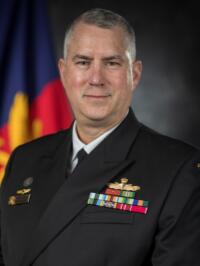
RADM Andrew Quinn, RAN
Head Space and Cyber Capabilities, Space and Cyber Capabilities Division, Joint Capabilities Group
RADM Andrew Quinn, RAN graduated from the Australian Defence
Force Academy in 1991 with a Bachelor of Science. Early in his career
he served as an Officer of the Watch and Fighter Controller on
Australian and Canadian Frigates.In 1998 he graduated as a Principal Warfare Officer (Air), and
subsequently served as the Gunnery Officer on the Frigates HMA Ships
Sydney and Adelaide. In 2003 he assumed Command of the Fremantle
Class Patrol Boat HMAS Bunbury and in 2005 the Armidale Class Patrol
boat HMAS Bathurst. After serving as the Evolved Sea Sparrow Missile
Project Director and within the Anzac AntiShip Missile Defence Upgrade
Project, he assumed Command of the ANZAC Class Frigate HMAS
Toowoomba in 2009. RADM Quinn has served in operations in Haiti,
East Timor, Solomon Islands, Border Protection and in the Middle East.
RADM Quinn was awarded a Commendation for Conspicuous Service
for his Command of HMAS Toowoomba.In 2013, RADM Quinn served as Director Frigates, responsible for the
through-life capability of the Anzac Class and Project Sponsor of the
Future Frigate Project. In 2017 RADM Quinn completed the Australian
Defence and Strategic Studies Course as well as a Masters of Arts
(Strategic Studies). In 2018 RADM Quinn served as the Combined
Maritime Forces Director Operations and Commander Maritime Task
Group Middle East Region, as part of Australia's commitment to
promote maritime security. In this capacity RADM Quinn was awarded
the US Legion of Merit. In 2019 and 2020 RADM Quinn served as the
Commander Australian Maritime Task Group, leading Maritime Task
Groups as either a Sea Combat Commander or as a Commander Task
Group. This has included multiple operational deployments in the Indo-Pacific.In November 2020, RADM Quinn commenced as Director General
Surface Combatants and Aviation, responsible for the through-life
capability of surface and aviation assets. RADM Quinn then served as
the Director General – Modernisation, Assessment and Assurance in
Joint Operations Command. On promotion to Rear Admiral, RADM
Quinn commenced his current posting as Head Space and Cyber
Capabilities in Joint Capabilities Group in December 2024.In his spare time RADM Quinn is a reluctant gardener, enjoys reading
(biographies and fantasy), strategy gaming, spending time with his wife
and adult children, and walking Bella the family labradoodle. -
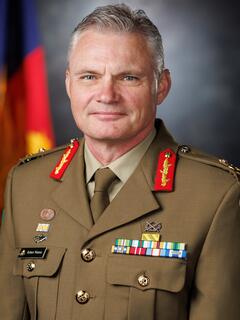
MAJGEN Robert Watson, CSC
Commander Cyber Command, Joint Capabilities Group
Major General Watson enlisted in the Australian Regular Army in 1992 as an Electronic Warfare Operator. In 1996, he was appointed to the Royal Military College, Duntroon, and following graduation, he returned to the Royal Australian Corps of Signals.
Throughout his career, Major General Watson has been fortunate to serve in a range of appointments at the 1st Signal Regiment, 7th Signal Regiment (Electronic Warfare), Defence Force School of Signals and the 2nd Commando Regiment. Additionally, he has held a series of staff appointments at Division, Command and Service levels. As a senior officer, he has served as Director Joint Cyber, Director General Joint Information Warfare, and most recently as the Deputy of Operations, United States Cyber Command - the first non-United States officer to do so. Currently, he is the Commander of ADF Cyber Command.
Major General Watson has deployed multiple times to East Timor and Afghanistan, most recently in 2013/14 as the CJ3 of the International Security Assistance Force, Special Operations Forces.
He holds postgraduate degrees in Information Technology (USQ) and Military Studies (ANU) and is a Graduate of the Australian Institute of Company Directors. -
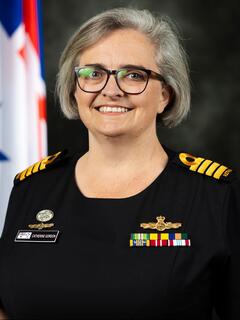
CAPT Catherine Gordon, RAN
Commander Information Warfare Force, Department of Defence - Fleet Headquarters
Captain Catherine Gordon assumed command of the Royal Australian Navy's Fleet Information Warfare Force in April 2024, overseeing Communications, Cyber, Intelligence, Maritime Tactical Data Networks, and Information Effects.
Joining the Navy through ADFA in 1990, she began her career as a maritime warfare officer, completing specialist training in Anti-Submarine Warfare Aircraft Control, Communications Information Systems, and Surface Warfare.
She commanded the RAN Tactical Electronic Warfare Support Section from 2013–14, where her leadership contributed to the unit winning the Fleet Electronic Warfare Proficiency Shield. From 2016–20, she served as Deputy Chief of the Cyber Security Division at US Central Command, leading major cybersecurity initiatives that strengthened defensive cyber operations supporting multiple coalition missions. For her work, she received the US Defense Meritorious Service Medal.
A founding member of the Information Warfare Officer category established in 2022, CAPT Gordon has held a series of senior Information Warfare, interoperability, and policy roles across Navy and Joint and US DoD organisations.
She holds degrees from UNSW Canberra in Information Systems, Capability Management and Engineering Science.
-
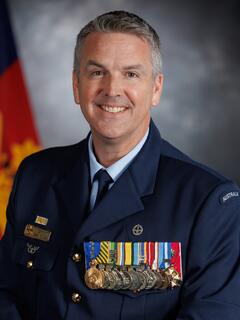
AIRCDRE Davin Augustine
Acting Head Military Personnel, Royal Australian Air Force
AIRCDRE Augustine assumed his current appointment as Director General Personnel - Air Force in December 2023.
AIRCDRE Augustine's deployed operational service includes Peacekeeping with the United Nations in Timor Leste in 2000, Operations Officer of Australia's Air Traffic Control Detachment in Baghdad, Iraq in 2004, embedded Plans Officer with the Royal Air Force Regiment in Kandahar, Afghanistan in 2009 and Chief of Staff of Australia's Joint Task Force in the Middle East Region in 2019.
He has commanded Air Force's Combat Survival Training School, and Air Force's Officers' Training School. These command appointments allowed him to fuse his military experience with his civilian teaching expertise, gained from a previous career as an educator.
AIRCDRE Augustine has held a variety of staff appointments including Staff Officer to Deputy Chief of Air Force, Deputy Director Battlespace Operations & Specialist Support within Directorate Personnel – Air Force, Director Senior Officer Management for the Australian Defence Force (ADF) and the CDF Liaison Officer to the US Chairman of the Joint Chiefs of Staff in the Pentagon, Washington DC – a career highlight.
He is a graduate of the University of Central Queensland (Education Degree), the University of New South Wales (Masters of Management), the Singapore Armed Forces Command and Staff College and the Wharton School at the University of Pennsylvania (Advanced Management Program).
In 2021, he was awarded the Conspicuous Service Medal for his devotion to duty and outstanding leadership on deployed operations. He was made a Member of the Order of Australia in 2022 for his exceptional service in training development, organisational reform, and strategic workforce management for the ADF. In 2023 AIRCDRE Augustine was also awarded the US Legion of Merit - Officer for his stewardship of the strategic military-military relationship between Australia and the United States.
AIRCDRE Augustine considers himself incredibly privileged to hold the DGPERS-AF position and he is extremely motivated to continue to serve at the highest levels of the ADF.
His interests include freshwater fly fishing, Australian Rules football, and kayaking. AIRCDRE Augustine is married to Allison and they have two adult daughters.
-
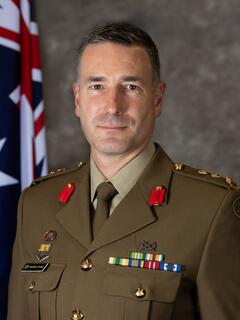
COL Geoff Crossie
Director, LISREW Program, Department of Defence, AHQ
Colonel Crossie was appointed as the Program Director for Land Intelligence, Surveillance, Reconnaissance, and Electronic Warfare in January 2026.
He graduated from the Royal Military College Duntroon in 2004 into the Royal Australian Corps of Signals.
In 2014-15, Colonel Crossie was the Officer Commanding 126th Commando Signal Squadron, 2nd Commando Regiment. From 2021 to 2022, he was the Commanding Officer of the 8th Signal Regiment.
Operationally, Colonel Crossie has deployed to Timor Leste and Afghanistan with the Special Operations Task Group and supported domestic security operations including the G20 Summit.
Colonel Crossie is a graduate of both Staff College and the Capability Technology Management College. He has held capability appointments within the Land C4 Program of Land Capability Division, and Headquarters Special Operations Command as the lead for C5ISREW modernisation.
His academic qualifications include a Bachelor of Science (Sydney University). Masters of Capability Management (University of New South Wales), Masters of Business (University of New South Wales) and a Masters from Australian Command and Staff College (Australian National University).
-
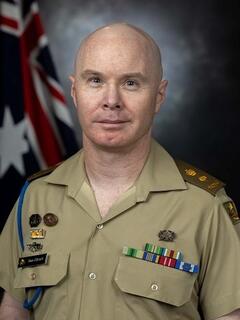
LTCOL Samuel Ellyard
Deputy Director Cyber Futures, Australian Defence Force Cyber Command
Lieutenant Colonel Samuel Ellyard is a career officer in the Royal Australian Corps of Signals.
He has extensive experience across cyberspace and electromagnetic spectrum operations in Army and the Integrated Force. He is currently serving as Deputy Director Cyber Futures in Cyber Command.
-
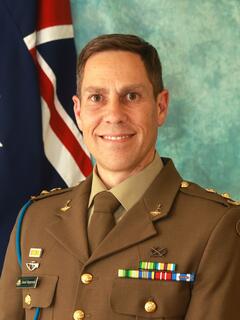
LTCOL Daniel Mapperson
Commanding Officer, 7 Sig Regiment
Lieutenant Colonel Mapperson has a long history in electronic warfare, having enjoyed experience spanning regimental, Joint, inter-agency and multi-national environments. His early career appointments include as an electronic warfare Troop Commander within both the 7th Signal Regiment and the 126th Commando Signal Squadron, 2nd Commando Regiment; the lead Electronic Warfare Planner within Headquarters 1st (AS) Division; and Officer Commanding the Electronic Warfare Wing at the Defence Force School of Signals. Over this period, he has served in electronic warfare roles on operations domestically, in the middle east and with the Five Eyes community.
More recently, Lieutenant Colonel Mapperson has been involved in interoperability design of the Joint Force and contributed to Defence's policy and development of autonomous and uncrewed systems.
Lieutenant Colonel Mapperson is firm believer in teams, and the strength teams-of-teams possess to bring relevant and timely capability for Australia's national advantage.
-
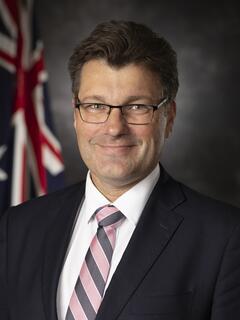
Dr Nigel McGinty
Chief Human and Decision Sciences, Defence Science and Technology Group, Department of Defence
Dr Nigel McGinty has been the Chief of Human and Decision Sciences Division since March 2025. The division consists of 290 scientists, technologists, and engineers and spans human performance, optimising decision-making, operations analysis, modelling, simulation, and war-gaming to support the ADF.
Prior to this position, Dr McGinty was the Chief Technology Officer of Science Strategy, Communications and International Engagement. Dr McGinty is responsible for Defence's Innovation Science and Technology Strategy, determining policy direction, and advocating for Defence science and technology.
Previously, Dr McGinty led the National Security Science and Technology program, fostering the development of S&T across Government to enhance Australia's national security. Other roles include Program Leader of the Integrated Force and Head of Strategy and the Joint Force Branch.
Dr McGinty began his career specialising in signal processing to optimize digital communications systems, and has gained extensive experience in emerging technologies, force design, joint concepts, whole-of-force experimentation, simulation, and strategy.
Dr McGinty has received three Defence Gold Commendations, a PhD in Telecommunications Engineering from the Australian National University, and a Bachelor of Electronic Engineering from RMIT University.
-
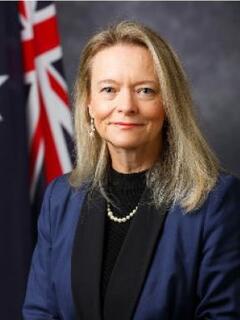
Dr Sylvie Perreau
Chief, Land & Integrated Force, Defence Science and Technology Group, Department of Defence
Dr Sylvie Perreau grew up and studied in France until she graduated from Telecom ParisTech with a PhD in Telecommunications Signal Processing in 1998. She worked in Industry (Alcatel) during her PhD studies and Academia (University of Connecticut and UNISA) for 13 years.
She established an international reputation in the areas of Wireless Sensor Networks with over 80 publications and 1700 citations.
She joined DSTO (now DSTG) in 2011 where she worked predominantly in the Intelligence Domain before leading the Contested Communications Branch.
In January 2023, she was appointed the inaugural Chief of Sensors and Effectors Division at DSTG after acting in this position for 6 months. Sylvie was awarded an Exceptional Achievement Award from the Australian Signal Directorate (ASD) in 2018 and the 2020 Minister's Award for Achievement in Defence Science for her work in signal processing and wireless networks within highly classified environments across Australia and the globe.
In January 2026 Sylvie was appointed the Chief of Land and Integrated Force for the Defence Science and Technology Group (DSTG). She currently leads the development and implementation of Innovation, Science and Technology programs to address the highest priority challenges and regularly deliver impact in the land domain as well as the integrated force.
-

AVM (retd) Kym Osley, AM, CSC
Executive Secretary, Australian Institute of Navigation
AVM Kym Osley AM, CSC (retd) is a Fellow of the Centre for Defence and Strategic Studies, a Master Air Navigator of the Honourable Company of Air Pilots and is Executive Secretary (and a Fellow) of the Australian Institute of Navigation. He has over 48 years of Defence experience, including fast-jet command tours at Squadron, Wing, and Group-level. Kym deployed as Director of the Coalition Air Operations Centre in the Middle East in 2006/07 where he directed the employment of 425 Coalition aircraft and 25,000 airmen. He was the senior Australian Defence representative in the US in 2008-2010, before returning to Australia to lead the $17Bn Australian F-35 Program. In 2014 AVM Osley transferred to the Air Force Reserves and has and continues to serve on several Defence and aerospace-related company Boards.
-

MAJGEN (retd) Mick Ryan
Senior Military Fellow, Lowy Institute
Mick spent over 35 years in the Australian Army. He served in East Timor, Iraq and Afghanistan as well as on the U.S. joint staff in Washington DC. He is a keen author on the interface of strategy, innovation, advanced technologies, and people, and has published several books.
Mick is the inaugural Senior Fellow for Military Studies at the Lowy Institute in Sydney, and an adjunct fellow at the Center for Strategic and International Studies in Washington DC.
-

Mr Michael Shoebridge
Founder and Director, Strategic Analysis Australia
Michael is Director of Strategic Analysis Australia. From 2018 until September 2022, he was the Director of the Defence, Strategy and National Security Program at the Australian Strategic Policy Institute (ASPI) in Canberra.
Before the think tank world, Michael was a deputy in two Australian intelligence agencies – the Australian Signals Directorate and the Defence Intelligence Organisation.
He has worked in two Australian Federal Government ministers' offices. As the First Assistant Secretary for Strategic Policy in Defence, he led the team that wrote Australia's 2013 Defence White Paper and also administered defence exports policy and legislation. In his first Senior Executive Service role he led the tender evaluation, selection and contract negotiations for the Australian Navy's Armidale Class Patrol Boats. His last role in the Defence organisation was as the head of the Contestability Division that provides objective analysis of the overall $270 billion investment program.
Michael was Australia's senior defence policy official in the Australian Embassy in Washington from February 2005 to June 2007. He was seconded to the UK Ministry of Defence in 1999-2000. He has also served in the Senior Executive Service in both Australia's Finance Department and the Prime Minister's Department, where he was head of the Defence, Intelligence and Research Division.
Michael is married to Margaret and they have three children.
-

Dr Oleksandra Molloy
Senior Lecturer in Aviation, University of New South Wales
Dr Oleksandra Molloy – is one of the leading experts in drone warfare in Ukraine. In 2025, Dr Molloy has been named 'Academic of the Year' by the Australian Defence Industry Awards. In her daily role, Dr Molloy is a senior lecturer in aviation, and the Lead of the Human Factors Research Lab, at the University of New South Wales at the Australian Defence Force Academy (Canberra, Australia).
Dr Molloy is a research trailblazer and award-winning leader who conducts multi-disciplinary research in human factors, transport safety, uncrewed and autonomous systems, AI. Dr Molloy has led multiple complex research projects the first evidence-based research "Drones in Modern Warfare: Lessons Learnt from the War in Ukraine" investigating the role of UAS/C-UAS in the war in Ukraine.
-

Prof Katherine Daniell
Director, ANU School of Cybernetics
Professor Katherine Daniell is Director of the Australian National University's School of Cybernetics and a John Monash Scholar. Trained in engineering, arts and public policy, Katherine's work focusses on collaborative approaches to policy, action and education for sustainable development.
Katherine has a particular interest in systems and cybernetic approaches to understanding the role of technologies shaping societies and environments, such as AI and infrastructure systems. She is also a globally recognised expert in participatory methods for supporting decision-making and governance in complex systems, and is an Advisory Council Member for the World Economics Forum Top 10 Emerging Technologies.
Katherine was the inaugural convenor of the experimental and radically transdisciplinary Master of Applied Cybernetics from 2018-2022, and has worked for many years in research and innovation cooperation between sectors and countries. Her work has been acknowledged by multiple awards and honours including the French Chevalier (Knight) in the Ordre National du Mérite.
-
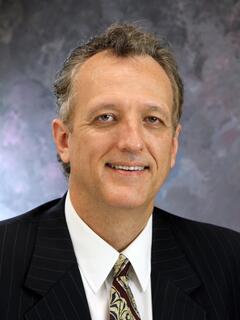
Mr Nils Smith
Vice-President, Defence and Intelligence Solutions Division, Southwest Research Institute (SwRI)
Mr. Smith has accumulated significant experience in the design, development, and testing of shipboard, land-based, and airborne Electronic Support systems and in the management and development of related projects and programs.
Mr. Smith has extensive experience with military, rugged commercial and commercial design requirements and in project, program, and administrative management. His main technical emphasis has been in direction finding antennas, beam-forming networks, and RF system design and analysis. He has managed programs involving analysis, research, development, production, testing, consulting, training, and field services. He also led numerous QRC efforts.
Mr. Smith was selected as the Engineering Manager of the Year by the Engineering Management Society of the Institute of Electrical and Electronic Engineers (IEEE) for 2006. He was also awarded the Dixie Crow Stanley B. Hall Executive Management Award in 2020 and Dixie Crow Anton D. "Tony" Brees Lifetime Service Award.
-
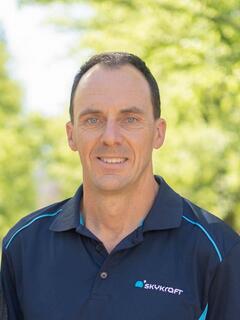
Dr Craig Benson
Director and Chief Innovation Officer, Skykraft
Craig is an Electrical Engineer and co-founder and Chief Innovation Officer at Skykraft where he builds satellites for Air Traffic Management.
As a RAAF officer, Craig ran a flight line at 38 Squadron and then trained in Electronic Warfare at Shrivenham before returning to Electronic Warfare Squadron where he worked in R&D flight, specifically developing countermeasures, advising acquisition and teaching Electronic Warfare. He has been teaching Electronic Warfare ever since, and the ability to see what systems actually do, rather than what they were intended to do underpins Skykraft's Air Traffic Management business today.
While primarily focussed on civilian Air Traffic Management, Craig is always assessing the deeper, long-term impacts of the rapid growth of space capability on a range of Defence needs. Outside of work he is a runner and triathlete.
-

Dr Haruko Kawahigashi
Chair, International Advisory Committee, Association of Old Crows
Dr. Kawahigashi received B.E. and D.Eng. degrees in Electrical Engineering from the University of Tokyo, in 1985 and 2001, respectively. Dr. Kawahigashi joined Mitsubishi Electric Corporation in 1885, where she has been engaged in research and development of commercial carrier networks, defense networks, and EW. She has written over 100 conference papers and obtained 45 patents in Japan, US and Europe. She was a visiting researcher at the University of California, Berkely in 1991-1992.
Dr. Kawahigashi founded AOC Japan Chapter EW research group and organized its annual conferences since 2012, cosponsored with IEICE (Institute of Electronics, Information and Communication Engineers) Japan. The annual conference has activated AOC Japan Chapter and EW R&D community in Japan. She participated in AOC annual symposium every year since 2010 except for COVID periods and presented technical papers in many of them.
Dr. Kawahigashi published Japanese version of EW101, 102, 103, 104 and 105 by Dave Adamy, co-translated with her ex-colleagues in Mitsubishi Electric. These are the first and the only EW technical book series in Japanese and printed over 15,000 copies overall. They enlightened Japanese people on EW as a defense science.
Dr. Kawahigashi received Technology Hall of Fame Award of AOC in 2019. She was At-Large Director of AOC in 2020-2025.
Current Positions:
-Head Researcher, Mitsubishi Electric Corp., Information Technology -R&D Center, Japan
-Chair, International Advisory Committee, Association of Old Crows
-Secretary, AOC Japan Chapter
-Lecturer (part-time), Kanagawa Institute of Technology, Dept. of Information Technology, Japan -
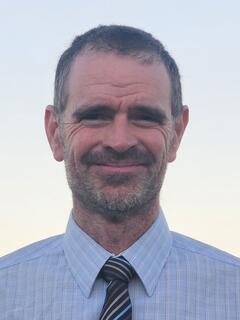
Mr Marcus Varcoe
Deputy Program Lead, Joint EW & SIGINT, Defence Science and Technology Group
Marcus Varcoe is an Electronic Warfare specialist with 25 years' experience in Defence Science and Technology Group. Over a career spanning circuits to software, and algorithms to flight test, he developed comprehensive insight in the lifecycle of developing EW capability for Defence.
His project experiences with domestic and international defence stakeholders, pulling S&T through to operational end users, has lead him into his role as Deputy Program Lead Joint EW. The Joint EW S&T program is focussed on delivering innovative concepts that harness the power of an integrated force, to provide a decisive capability edge for ADF on the Electromagnetic Spectrum battlefield.
-
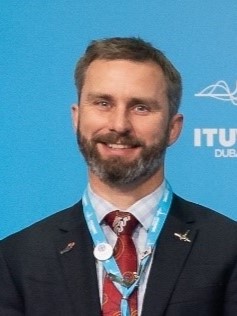
Mr David Murray
Director, International Radio Communications, Department of Infrastructure, Transport, Regional Development, Communications, Sport and the Arts
David has extensive experience in spectrum management, having begun his career as a radiofrequency engineer with the Australian Communications and Media Authority before moving to Defence with roles in satellite communications and as Director of the Defence Spectrum Office.
David has been with the Department of Infrastructure since 2020 working on both domestic and international communications policy.
In his current role, David is responsible for Australia's preparations for the 2027 World Radiocommunications Conference where the Radio Regulations, the international treaty that governs spectrum, will next be revised. David has been a member of Australia's delegation to every WRC since 2012, including most recently in Dubai in late 2023.
-

Mr Glenn Odlum
Electromagentic Spectrum Domain Manager, Nova Systems ANZ
Glenn has 28 years experience in the radiofrequency engineering design and spectrum management industry with extensive experience in microwave and cellular design, spectrum management and engineering and regulatory engagements. Glenn has represented Australia in the International Telecommunications Union and the Asia Pacific Telecommunity as Head of Delegation and a Delegate over a 20-year period both while employed with the national regulator (ACMA) and the Department of Defence. Glenn is the current Australian Radiocommunications Study Group 5 chair for Terrestrial services and chairs agenda items at the Asia Pacific Telecommunity Preparatory Group for the current World Radio Conference study cycle.
In his previous role spanning over 14 years as the Principal Engineer of the Spectrum Planning and Engineering section within the Defence Spectrum Office attached to the Department of Defence, Glenn has led a team of radiocommunication engineers managing the use of Electromagnetic Spectrum (EMS) for whole of Defence. The scope of this work spans from procurement support, research and development through to domestic operational support. Glenn represented Defence in bilateral and multi-lateral spectrum working groups involving other militaries including the five-eyes Combined Communications and Electronics Board (CCEB).
Glenn is currently working as a Principal EMS Engineer developing the EMS Engineering capability within Nova Systems. Glenn holds a Bachelor of Engineering in Electronics and Communications as well as a Master of Systems Engineering specialising in Electronic Warfare.
-
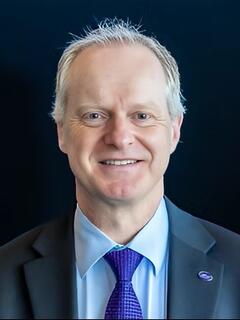
Mr Allan Dundas
CEO, DEWC Services, AOC ANZ Board Member
Allan Dundas commenced his career with the Royal Australian Air Force in 1990 at the age of 17 and now has over 35 years of experience in national defence, having served in uniform, civilian and industry roles. Allan is the founder (in 2012), Chair and Chief Executive Officer of DEWC Services Pty Ltd, a rapidly growing Australian defence EW, Intelligence, Cyber and AI capability company based in South Australia with over 100 staff. He is an accomplished company director, business leader, engineer and proud Australian Defence Force (ADF) Veteran.
Involvement with the Organisation: Allan has been a member of the AOC for over 20 years and has served as a Director on the Board of the AOC Australian Chapter since 2005.
Notable Achievements/Industry Recognition: Allan was a finalist in the 2024 Prime Minister's National Veteran Employment Awards in the Veteran Entrepreneur of the Year category. Under Allan's leadership, DEWC has twice been awarded as the Consultancy of the Year at the Australian Defence Industry Awards in 2019 and 2023. DEWC was the 2022 and 2024 State winner of the Defence Reserves and Employer Support Awards for the medium private category. DEWC was the State winner of the 2023 and 2024 Australian Achiever awards for excellence in customer service.
Awards, Recognitions, or Significant Accomplishments / Education: Allan holds a Bachelor of Electrical Engineering with First Class Honours from UNSW awarded at the Australian Defence Force Academy. He also holds master's degrees in systems engineering and business administration, is a Graduate of the Australian Institute of Company Directors and a Fellow of Engineers Australia.
-

Mr Kuba Kabacinski
CEO, Consunet Pty Ltd
Kuba Kabacinski, CEO of Consunet, has over 25 years of corporate leadership experience spanning technology and finance, combined with technical expertise in distributed electromagnetic warfare (EW), software, and open systems.
Kuba has led Australian and international teams to deliver advanced EW capabilities for subsurface, surface, land, and air platforms, driving innovation in geolocation, Defence situational awareness, and high-assurance systems. Under his leadership, Consunet has delivered operational capability at scale and grown into a leading sovereign Information Warfare business.
He also serves as Chair of the RFTEQ board, a successful start-up innovating advanced signals technology and EW hardware solutions. Kuba's strategic leadership and commercial acumen have played a significant role in strengthening Australia's defence technology ecosystem.
-
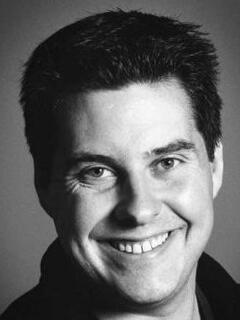
Dr Thomas Millhouse
Customer Account Manager - C4isrew, Raytheon Australia
Dr Tom Millhouse has been engaged in the Australian Electronic Warfare Community for over 25 years, and involved in most of the nation's most sensitive Electronic Warfare capabilities across all domains for the past two decades. Tom has designed, integrated, verified, validated, and operated the nation's most formidable EW capabilities in both Commonwealth, S&T and Industry roles.
During his RAAF career he has held key roles at CASG, JEWOSU and the Defence Signals Directorate and the formative national programs Echidna, Def 224, JORN, Air555 and Air5276. He was awarded a commendation for this roles in Airborne Countermeasures and in Operational Support to the Middle East Aera of Operations in 2004. He was an Engineering Manager for the ALR-2001 ESM project on AP3C, Mission System Architect for the MC-55A Peregrine platform, and lead the design, installation and countermeasure development of multiple Air and Land EW self-protection capabilities.
He was the Engineering Design Authority and signed the first Design Certificate for the Air Warfare Destroyers Electronic Warfare and Above Water Sensors Subsystem. Tom lead the Raytheon Electronic Warfare Campaign to capture Land555 Phase 6 and the Modernisation of Maritime Electronic Warfare Strategic Partnership.
He has been a former Board Member and Australian Vice President of the Association of Old Crows – and is internationally recognised as a leader in the field of Electronic Warfare through peer reviewed publications and presentations at Australian and International Electronic Warfare Conferences.
-

Prof Allison Kealy
CEO, SHIELD CRC
Professor Allison Kealy is Director of Swinburne University's Innovative Planet Research Institute (IPRI) and an internationally recognised leader in resilient positioning, navigation and timing (PNT), sensor fusion and quantum-enabled sensing. She is a co-founder of the Victorian Disaster Research Alliance, a Board Member of Quantum Australia, and a Fellow of both the International Association of Geodesy and the Royal Institute of Navigation.
Allison has held senior government leadership roles, including Executive Director (Surveying & Spatial) at the Victorian Department of Transport and Planning, where she led major digital transformation programs such as Digital Twin Victoria. As one of the architects of the SHIELD CRC, Allison brings deep expertise in high-integrity PNT sensors and systems, critical-infrastructure resilience, and building cross-sector collaborations to enhance Australia's sovereign PNT capability.
-
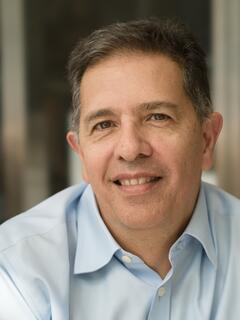
Dr Len Sciacca
CEO, ASR Defence
Len Sciacca is co-founder of ASR Defence, an Australian company specialising in advanced radar, electronic surveillance, and autonomous sensing systems. With a career leading Radar and EW in DSTG, industry R&D, and University research. ASR defence is leading the design of low-SWaP multifunction radars, distributed maritime sensing architectures, and AI-enabled TEWA systems for unmanned platforms. His work integrates deep technical expertise in Radar, EW, signal processing, antenna systems, and embedded autonomy with a practical understanding of operational needs across the ADF and allied environments.
Len has contributed to major defence research initiatives, collaborated with universities and industry, and provided technical leadership in projects ranging from radar, sensor fusion, sonar and battle management systems. He is recognised for driving rapid prototyping, sovereign capability growth, and commercially viable defence technology pathways. Through ASR Defence, he continues to champion innovative, deployable solutions for Australia's evolving grey-zone and defence surveillance and EW challenges.
-

Mr Anthony Allen
Director, Information Power Institute Australia
Anthony is the co-founder and Director of the Information Power Institute Australia. He has more than 25 years' experience in complex program management, research and analytics, intelligence, cyber and information operations planning along with systems and governance design for Defence, government and private sector.
This has involved a mix of strategic planning and advice to senior government officials across Defence and the Department of Foreign Affairs and Trade (DFAT) along with field experience gained during numerous deployments in the Middle East and the Indo-Pacific focused on intelligence analysis and planning, information operations and non-kinetic effects.
Anthony's extensive research and development in the theory and practical application of information warfare capabilities and design has led him to working directly on a number of government initiatives designed to boost information warfare capabilities and increase decision superiority in a complex and contested environment. He has also spoken at a number of conferences in Australia and overseas on this important topic and is particularly interested in best practice approaches to sophisticated statecraft.
-
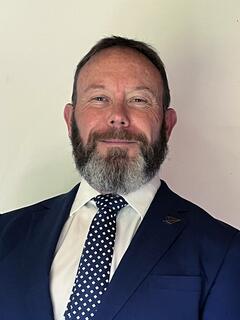
Mr Simon Burling-Claridge
NZDF Electromagnetic Spectrum Advisor, New Zealand Defence Force
After a successful 33-year career in the Royal New Zealand Air Force (RNZAF) culminating in the role of Warrant Officer of the RNZAF Communications and Information Systems Trade, Simon retired from uniform in 2019 and became the NZDF Electromagnetic Spectrum Advisor, leading and progressing plans to uplift all elements of the NZDF spectrum management capability, including policy, technology, information management, interoperability, and skillsets. Additional roles have included being the chair of a five eyes electromagnetic spectrum working group and being the NZDF representative on NZ government delegations to ITU regional and global meetings.
Whilst in uniform Simon was deployed operationally in Antarctica, Iraq, the Solomon Islands and three times to Afghanistan. These deployments included having roles in radio, satellite, information systems, communications security, spectrum management, and ES environments.
When not in the office, you can find Simon in the role of the president of the local go-kart club - Kartsport Wellington.
-

Ms Harjit Rana
Associate Director, Design, Translation and Engagement, Jericho Smart Sensing Lab, Sydney Nanoscience Hub, The University of Sydney
Harjit Rana is a design strategy lead working at the intersection of Defence, research, and industry, focused on accelerating the transition of advanced sensing and electronic warfare technologies into operational capability. Based at the University of Sydney, she plays a key role within the Jericho Smart Sensing Laboratory (JSSL), leading an integrated co-design approach that brings together science and design to deliver end user–led capabilities.
Working closely with the Royal Australian Air Force, Harjit supports problem exploration, ideation, and prototyping to ensure research outcomes translate into practical, deployable solutions that strengthen sovereign capability and national resilience. She brings a unique ability to empathise with operators, researchers, and industry partners alike, enabling her to align operational needs, scientific research, and industry delivery to support smooth translation pathways from concept to capability.
In 2025, she was selected as one of four Australian participants on the International Visitor Leadership Program (IVLP) in the United States, focused on strengthening the workforce across QUAD nations for critical and emerging technologies. She is passionate about developing people and pathways into electronic warfare, championing collaboration and interdisciplinary skills to support the next generation of EW professionals.
-

Mr Rian Whitby
Deputy Chief Operating Officer, DEWC Services
Rian Whitby is the Deputy Chief Operating Officer at DEWC Services, where he splits his time between executive business management and providing embedded, specialist support to Defence across capability governance, development and support functions. Rian brings over 15 years of experience across Defence and industry, having started his career as a full time Naval Officer before transitioning into industry while continuing to serve as an active Reservist. His career path reflects a non-linear journey into electronic warfare, combining operational experience with industry, academia and Defence partnerships to help translate real world needs into practical capability outcomes.
With experience working at the intersection of people, technology and operations, Rian is passionate about workforce development and demystifying career pathways into EW. He brings a pragmatic, outcomes focused perspective, grounded in the realities of service and industry.
-

Dr Tomasz Jasinski
Discipline Leader Counter ISR, Defence Science and Technology Group, Department of Defence
Tomasz Jasinski has spent his 25-year career working in the areas of Radio-Frequency (RF) Vulnerability Assessment and RF Countermeasures at the Defence, Science and Technology Group in Edinburgh, South Australia across land, sea and air domains.
He has taken pride in spearheading AI-driven and autonomous EW research and his current focus is on low-cost, distributed and autonomous EW. He is currently undertaking an MBA exploring modern, agile work environments and workforce structures that foster collaboration with industry, accelerate Defence innovation and allow for more rapid and agile deployment of EW.
-

Mr Paul Burford
Director, Defence Spectrum Office, Joint Capabilities Group – j6 Operations Support
Paul Burford has over 25 years experience in spectrum management in both domestic and international forums including the International Telecommunication Union activities. In his current role Paul is the Director of the Defence Spectrum Office which manages the spectrum for all of Defence for both terrestrial and satellite systems. He has held a variety of roles in spectrum management within Defence but has had a particular focus for a large part of his career in securing spectrum access for Defence satellite systems. In a previous role he worked in Airservices Australia as a spectrum engineer and as an engineer maintaining navigation aids.
Paul has a Bachelor of Engineering (Hons) in Electrical and Electronic Engineering from the University of Adelaide and a Master of Engineering Science (Electrical Engineering) from the University of New South Wales (ADFA).
-

Mr David Enchelmaier
Advanced Concepts Engineer, L3Harris Technologies
David Enchelmaier is an Advanced Concepts Engineer at L3Harris, based in Eight Mile Plains, Queensland. He has over 25 years experience designing high performance RF and photonic products for EW applications in all domains. Notable capabilities David has contributed to include ESM and RWR systems on aircraft such as the E-7 Wedgetail, F/A-18 E/F Super Hornet, and KC-46 Pegasus, and various maritime ESM and decoy systems.
Technology innovation supporting end-user mission needs is a long-standing interest for David. Throughout his career he has worked closely with DSTG on Electronic Warfare and Radar technology development. These collaborations have ranged from advanced Capability and Technology Demonstration activities through to design and manufacture of custom equipment for Hardware In the Loop test environments.
David holds a Bachelor of Engineering (Aerospace/Avionics) and a Masters Degree in Engineering (Research). He is a past director of the Australian chapter of the AOC and remains actively involved.
-

Dr Marc Olivieri
Senior Fellow, L3Harris Technologies
Presentation:
Project ARKENSTONE – Accelerating Agentic AI for Cognitive EW – Meet the first ever Team of Agentic AI EW Virtual Crows
Co-Presenter:
Dr George EliasAbstract:
Over the past year, L3Harris Advanced Combat Systems EW team achieved a breakthrough in cognitive electronic warfare through Project ARKENSTONE with the first rapid development of an Agentic AI team capable of executing complex cognitive EW missions in contested modern battlespace environments. This innovation was developed in parallel with AI advancements from industry leaders including Anthropic, Google, and strategic partners like Palantir. Unique by its disruptive and unconventional methodology, ARKENSTONE introduces revolutionary EW reasoning capabilities supported by the proprietary Echo Omega Agent Language.
ARKENSTONE accelerates agentic AI adoption for cognitive EW. Virtual teams of EW operators/officers work collaboratively within a sophisticated hybrid architecture. This system integrates specialized EW tools, fragmented reasoning models, domain-specific world models, and LLMs enabling seven distinct collaborative agents to communicate authentically replicating human EW cell operations. Through precision-engineered context management, ARKENSTONE leverages next-generation LLM capabilities optimized specifically for EW reasoning tasks, demonstrating exceptional performance within mission-critical scenarios. Virtual agentic AI teams provide critical force multiplication for INDOPACOM partner nations whose armed forces face challenging shortages of specialized EW personnel. ARKENSTONE empowers adopters with sophisticated electromagnetic operations without extensive human expertise requirements.
This presentation examines ARKENSTONE's technical architecture, critical design decisions, and their relationship to foundational AI/ML ethical considerations. Results showcase the system's transformative potential across essential cognitive ISR and EW tasks: Electronic Order of Battle understanding, Electronic Attack techniques composition & optimization. Finally, ARKENSTONE addresses the technically demanding challenge of robust, adaptive cognitive EW solutions for War Mode Reserves (WARMs) & dynamically evolving threats.
Biography:
Dr Marc Olivieri is a Senior Fellow at L3Harris Technologies, leading the Advanced Concept Engineering Group for Airborne Combat Systems. With over three decades of experience in R&D, he specializes in signal processing, electronic warfare, cognitive technologies, neuromorphic optical processors, machine learning, and SIGINT.
Dr Olivieri pioneered cognitive spectrum operations, inventing the first optical neuron for neuromorphic processing and the RF Mobility Concept for dynamic spectrum operations. He developed cognitive jammers for DARPA and led Project ARKENSTONE for agentic AI in electronic warfare, & SHADOWSTALKER demonstration earning second place in the 2021 Navy ANTX-AI challenge.
He holds three U.S. patents in ISR and advanced radar technologies and has published extensively on cognitive spectrum operations and biosonar. Dr. Olivieri earned his BS degree in Mechanical Engineering from UTC France, and his MS and PhD in Ocean Engineering from Florida Atlantic University. He actively mentors multiple engineers and maintains extensive DoD/IC relationships.
-
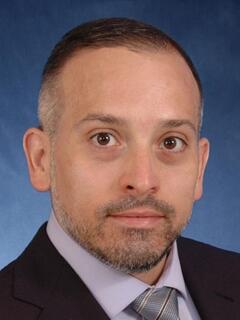
Dr George Elias
Senior Scientist, L3Harris Technologies Inc.
Presentation:
Project ARKENSTONE – Accelerating Agentic AI for Cognitive EW – Meet the first ever Team of Agentic AI EW Virtual Crows
Co-Presenter:
Dr Marc OlivieriAbstract:
Over the past year, L3Harris Advanced Combat Systems EW team achieved a breakthrough in cognitive electronic warfare through Project ARKENSTONE with the first rapid development of an Agentic AI team capable of executing complex cognitive EW missions in contested modern battlespace environments. This innovation was developed in parallel with AI advancements from industry leaders including Anthropic, Google, and strategic partners like Palantir. Unique by its disruptive and unconventional methodology, ARKENSTONE introduces revolutionary EW reasoning capabilities supported by the proprietary Echo Omega Agent Language.
ARKENSTONE accelerates agentic AI adoption for cognitive EW. Virtual teams of EW operators/officers work collaboratively within a sophisticated hybrid architecture. This system integrates specialized EW tools, fragmented reasoning models, domain-specific world models, and LLMs enabling seven distinct collaborative agents to communicate authentically replicating human EW cell operations. Through precision-engineered context management, ARKENSTONE leverages next-generation LLM capabilities optimized specifically for EW reasoning tasks, demonstrating exceptional performance within mission-critical scenarios. Virtual agentic AI teams provide critical force multiplication for INDOPACOM partner nations whose armed forces face challenging shortages of specialized EW personnel. ARKENSTONE empowers adopters with sophisticated electromagnetic operations without extensive human expertise requirements.
This presentation examines ARKENSTONE's technical architecture, critical design decisions, and their relationship to foundational AI/ML ethical considerations. Results showcase the system's transformative potential across essential cognitive ISR and EW tasks: Electronic Order of Battle understanding, Electronic Attack techniques composition & optimization. Finally, ARKENSTONE addresses the technically demanding challenge of robust, adaptive cognitive EW solutions for War Mode Reserves (WARMs) & dynamically evolving threats.
Biography:
George Elias, Ph.D., PMP is Chief Systems Engineer for L3Harris Technologies, Inc's Electronic Warfare Division leading initiatives in integrated spectrum management. Currently, Dr. Elias is leading several initiatives related to delivering advanced integrated information warfare capabilities through software-defined systems to the United States Government and its allies. Dr. Elias is experienced in leading the development and production of complex hardware and software system solutions including electronic warfare systems, communication systems, and space systems.
Dr. Elias has a Doctorate in Systems Engineering, a Masters Certificate in Project Management, and a Masters in Computer Science from Stevens Institute of Technology. Additionally, Dr. Elias has a Bachelors in Computer Information Systems from Rutgers, the State University of New Jersey & New Jersey Institute of Technology. Finally, Dr. Elias has a Mini-MBA from Rutgers, the State University of New Jersey.
-

Mr Jake Bostock
Capability Scout, Beaten Zone Venture Partners
Jake is a passionate Defence innovator whom after 9 years of full-time service in the Australian Army transferred to the Active Reserves in March of 2023 where he continues to serve within the ADF and is the lead for multiple bottom-up innovation projects.
Jake now spends most of his time in his new role as the Capability Scout at Beaten Zone Venture Partners, where he searches the country for Australian teams developing novel disruptive technologies that will enhance both the lethality and survivability of our Nations and our Allies warfighters.
Jake also volunteers his time with various industry organisations such as the Australian Industry & Defence Network, Defence in Business, Defence Industry Networking, the Australian Defence Investor Network, the Women in Defence Association and Defence Kidz.
-

Mr Narayan Dhital, (virtual)
Satellite and Aircraft Navigation Engineer, DLR GfR mbH, Germany
The presenter supports the peaceful use of technology and the power of global cooperation. With a decade of experience as a satellite and aircraft navigation engineer in the European aerospace sector, he blends technical expertise in satellite intelligence with a strong interest in geopolitics and macroeconomics. He holds an executive master's degree in international affairs and diplomacy from the United Nations Institute for Training and Research, with a specialization in EU–Asia Pacific trade and economic strategies. One of his current activities include the detection of conflict hot spots through the satellite-based identification of electronic warfare activity. In his private capacity, he applies macroeconomic modeling to analyze the recent surge of protests in small and open economies.
-

Dr Kasun Thotahewa
Principal EMS Engineer, Nova Systems
Kasun is a distinguished professional with over 15 years of expansive experience in radio frequency engineering. His career encompasses a diverse range of disciplines within this field. His career spans Electromagnetic Spectrum (EMS) Engineering, mobile telecommunications network planning, research and development in phased array antenna systems, radio frequency integrated circuit design, radar systems engineering, mission engineering and capability analysis for Defence ISREW capabilities.
In his previous role as a Senior Spectrum Planning Engineer with the Defence Spectrum Office, Kasun specialised in high-fidelity EMS modelling and simulations, as well as regulatory engagement. His responsibilities extended to representing Australia in the International Telecommunications Union, mainly in the area of spectrum sharing between military radar systems and 5G.
Presently, Kasun serves as a Principal EMS Engineer, leading the development of EMS Engineering capabilities within Nova Systems. Kasun holds a Bachelor of Engineering (Honours) in Electronics and Telecommunications, and a Ph.D. specialising in Radio Frequency Electronics and Applied Electromagnetics.
-

Dr Kathryn Brimblecombe-Fox, PhD, M. Phil, B.A
Honorary Research Fellow, School of Communication and Arts, The University of Queensland
Presentation:
The Invisible Battlespace: What Does it Look Like?
Abstract:
What does the 'invisible battlespace' look like? This seemingly simple question is addressed by contrasting standard digital representations/simulations of the EMS and the 'invisible battlespace' with research-informed creative visualisations. I present this contrast as a productive way to critique and perhaps shift current conceptualisations of the invisible battlespace.For example, should the EMS be designated a domain, along with land, air, sea, cyberspace, and space? Does the beyond-human speed (and therefore time) of signal-enabled hyperconnectivity and interoperability position scale as a risk?
Focussing on signal invisibility and issues of speed, time, and scale, this presentation meets growing calls for new ways to imagine and think about war in an age where civilian and military digital and cyber technologies are increasing reliant on signals.
Biography
Kathryn Brimblecombe-Fox, PhD, M. Phil, B.A, an inter-disciplinary researcher and visual artist based in Meanjin/Brisbane, Australia. She is an Honorary Research Fellow in the School of Communication and Arts, The University of Queensland.
Her research and creative practice examine issues associated with contemporary militarised technology, and the militarise-ability of contemporary civilian technology. Her creative practice-led PhD focussed on implications associated with increasing military and civilian techno-reliance on the electromagnetic spectrum.
Kathryn has presented about her research and creative practice at Australian-based and international conferences. Reflecting her interdisciplinarity, these conferences range across cultural studies, science and technology studies, international studies, art history, media studies, and drone studies.
Her research is published in peer reviewed journals and edited books. She has exhibited her paintings in Australia and internationally.
Presenters
-

Mr Angus Bean
Chief Product Officer, DroneShield
Presentation:
The New WMD (Weapons of Mass Disruption)
Abstract:
Angus Bean, Chief Product Officer of DroneShield, a global technology thought leader in countering uncrewed and autonomous systems (drones), explores the shift from Weapons of Mass 'Destruction' to Weapons of Mass 'Disruption'—remotely piloted and autonomous systems.
We'll dive into how man vs machine dynamics redefine warfare, shifting power from destructive to disruptive. We'll discuss the implications on global security, the ethical questions raised by autonomous systems, and the urgent need for international frameworks and technologies. Ultimately, we'll chart a path toward balancing innovation, defence, and control in the age of autonomous disruption.
-

Mr Tim Creevey
Capability Development Practitioner, SOIO – School of Information Operations
Presentation:
EW in Counter UAS Operations
Abstract:
EW in Counter-UAS Operations provides a foundational understanding of Electronic Warfare use in Counter- Unmanned Aerial Systems (CUAS) operations, and the technologies used to detect and mitigate associated threats. Participants will explore key UAS vulnerabilities across various operational environments and learn to assess potential threats effectively. The discussion covers a range of detection technologies—including radar, Lidar, audio, electro-optical systems, and electronic support measures—and emphasizes the strategic integration of these tools into a cohesive CUAS network. Learners will gain insight into the principles of UAS threat detection and the importance of layered adaptive countermeasures in modern security operations.
Biography:
Tim is an experienced Capability Development practitioner and a specialist in Uncrewed Aerial Systems with significant ADF training experience and over 30 years' operational experience with C5ISREW systems.
Tim was a Sensor Employment Manager (SEM) on the AP-3C Orion and has extensive experience in managing and operating sensors including imaging radars, EO/IR cameras, EW, and C4 systems on operations.
He has deployed on numerous national and international operations and exercises; his operational experience includes deployments in the Middle East, Indian Ocean, Hawaii and the South China Sea providing direct support to ADF, coalition elements and Joint Special Forces.
Tim was a Sensor Manager on the first RQ-4 Global Hawk deployment to Australia in 2001 and commanded the second rotation of ADF's Heron UAS deployment to Afghanistan in 2010. He is currently heavily involved in the introduction into service of the MQ-4C Triton UAS.
-

Dr Roland Croft
Applied Scientist, Swordfish Computing
Presentation:
ChatEW: Assured EW Mission Planning Through Human-Machine Teaming
Co-Presenter:
Mr James DeanAbstract:
ChatEW is an AI-enabled decision-support system prototype that transforms how Electronic Warfare (EW) missions are planned, analysed, and assessed by combining advanced Large Language Models (LLMs), semantic reasoning, and agentic AI with EW modelling and simulation. Through an intuitive natural-language interface, ChatEW allows analysts to explore complex electromagnetic scenarios conversationally, complementing traditional Graphical User Interface (GUI)-based approaches and reducing reliance on complex technical workflows.
Serving as an intelligent co-pilot, ChatEW understands analyst intent, interprets scenario context, and remains aligned with doctrine and mission constraints. Integrating Swordfish's AI Knowledge Interface For Dialog and Operation (AIKIDO) reasoning engine and DSTG's Force Level Electronic Warfare Simulation (FLEWS) environment, it builds a conceptual understanding of the EW battlespace, enabling analysts to focus on mission objectives while the system ensures consistency, traceability, and explainability.
ChatEW accelerates EW planning by answering questions using operational context, system characteristics, EW ontological relationships, supplied rule sets, and simulation-based insight. Its future evolution is toward goal-oriented agentic behaviour where analysts will issue high-level directives (e.g., "Develop an electronic attack plan to degrade Red's air defences while preserving Blue's SATCOM"), and ChatEW will interpret, develop and assess options, and provide justified courses of action.
By reducing training burden, increasing analytical speed, strengthening mission assurance, and enabling human-machine teaming, ChatEW delivers immediate operational advantage while paving the way for autonomous, goal-oriented EW assistants in future contested electromagnetic environments.
Biography:
Dr Roland Croft is an Applied Scientist at Swordfish Computing, acting as the Research Lead and current Team Lead for the Chat Electronic Warfare (ChatEW) project. Dr. Croft holds a Ph.D. in Machine Learning and Software Security from the University of Adelaide, and his research covers the areas of Applied AI, Human-Computer Interaction, and Data Quality.
He was awarded the doctoral research medal from the University of Adelaide, and was a recipient of the Cyber Security Cooperative Research Centre research scholarship. He has authored numerous peer reviewed articles that have garnered hundreds of citations in the fields of AI and software engineering.
-

Mr James Dean
Director, Information Warfare, Swordfish Computing Pty Ltd
Presentation:
ChatEW: Assured EW Mission Planning Through Human-Machine Teaming
Co-Presenter:
Dr Roland CroftAbstract:
ChatEW is an AI-enabled decision-support system prototype that transforms how Electronic Warfare (EW) missions are planned, analysed, and assessed by combining advanced Large Language Models (LLMs), semantic reasoning, and agentic AI with EW modelling and simulation. Through an intuitive natural-language interface, ChatEW allows analysts to explore complex electromagnetic scenarios conversationally, complementing traditional Graphical User Interface (GUI)-based approaches and reducing reliance on complex technical workflows.
Serving as an intelligent co-pilot, ChatEW understands analyst intent, interprets scenario context, and remains aligned with doctrine and mission constraints. Integrating Swordfish's AI Knowledge Interface For Dialog and Operation (AIKIDO) reasoning engine and DSTG's Force Level Electronic Warfare Simulation (FLEWS) environment, it builds a conceptual understanding of the EW battlespace, enabling analysts to focus on mission objectives while the system ensures consistency, traceability, and explainability.
ChatEW accelerates EW planning by answering questions using operational context, system characteristics, EW ontological relationships, supplied rule sets, and simulation-based insight. Its future evolution is toward goal-oriented agentic behaviour where analysts will issue high-level directives (e.g., "Develop an electronic attack plan to degrade Red's air defences while preserving Blue's SATCOM"), and ChatEW will interpret, develop and assess options, and provide justified courses of action.
By reducing training burden, increasing analytical speed, strengthening mission assurance, and enabling human-machine teaming, ChatEW delivers immediate operational advantage while paving the way for autonomous, goal-oriented EW assistants in future contested electromagnetic environments.
Biography:
James Dean is Swordfish's Director of Information Warfare, responsible for leading engineering teams to deliver projects across Information and Electronic Warfare and related domains.
James is responsible ensuring that programs deliver resilient capabilities to maintain an advantage in the information domain, and ensures the alignment of Swordfish's internal R&D initiatives with Defence priorities.
James is a chartered professional engineer and team leader with over a decade of experience leading distributed engineering teams in software intensive environments to deliver quality outcomes for clients.
-

Prof Ted Goranson
Scientist, Sirius-Beta Labs and George Mason University
Presentation:
Active EW: Categorified Modelling in EMSO
Abstract:
This reports on work begun in the US National Labs, continued in an ADF program of record, demonstrated in an ASCA EDT program, and slated for implementation studies in a US EW-inclusive mesh orchestration project.
The enabling technology is category theoretic abstraction, widely studied for EMS reasoning. The approach described here is supported by an experimental device, exploring a topos-based percept-act mission command paradigm. The desired utility is in modelling adversarial targeting systems with the goal of a virtual cyber break-in — exploiting weaknesses to confuse and fool targeting.
This paradigm has been called 'Active EW'; we have demonstrated this on a typical but quite tenable missile threat. A simple example will be presented in the context of AESA mesh spoofing in a congested littoral context.
A general method for spoofing advanced targeting systems is described in an unclassified context, using non-mathematical metaphors. A focus will be on category theoretic hardware that could supplement existing AESA architectures for adaptability in a next generation playbooks-as-code command paradigm.
Biography:
Ted Goranson was director of advanced research for the US National Security Agency (Section 41), and served as Office Scientist for nearly a decade at the DARPA Defence Manufacturing Office.
In several roles, he advised or managed basic and applied sensor/seeker research over 50 years. He now has projects in Australia for next generation 'plays' in electromagnetic spectrum operations.
-

Mr Oskar Jakubowski
Student, University of Adelaide
Presentation:
Kinetic Interceptor Drones as a Hard-Kill Complement to Electronic Warfare in Counter-UAS Operations
Co-Presenter:
Mr Aleksander PollockAbstract:
The widespread use of low-cost commercial UAVs for reconnaissance, delivery, or attack has outpaced many soft-kill Electronic Warfare (EW) countermeasures. RF jamming, GPS spoofing, and directed energy remain primary C-UAS tools, yet autonomous, fibre optic guided, or RF-silent drones increasingly render them ineffective.
This presentation examines kinetic interceptor drones, autonomous platforms designed for direct physical collision, as a necessary hard-kill layer that complements EW strategies. These systems exploit EW sensors for initial cueing, then transition to jam-resilient AI/vision terminal homing to ensure engagement in contested electromagnetic environments.
Key design drivers include
-Higher terminal speeds to deliver 5-10x the target's kinetic energy (KE=1/2mv2)
-Reinforced airframes for reliable hit-to-kill
-Pursuit guidance optimised for maximum closing velocityBy pairing EW soft kill with kinetic hard-kill, hybrid C-UAS architectures improve resilience, cost-effectiveness, and collateral safety in high- threat scenarios. The talk provides engineering rationale and performance estimates for EW professionals seeking spectrum-dominant yet physically decisive counter drone solutions.
Biography:
Oskar Jakubowski is a student at the University of Adelaide, currently in his final year completing a double degree in mechanical engineering and finance.
Oskar has industry experience through his internship at VPG Innovation, with whom he is currently partnered for his group's Honour's Project; the design and development of a titanium 3d printed unmanned aerial vehicle for physical interception roles.
Alongside his passion for engineering, this project exemplifies Oskar's entrepreneurial mindset, having independently engaged with multiple defence organisations to explore contribution pathways and strategic partnerships. He has also undertaken an internship with the Polish Australian Chamber of Commerce to further develop his passion for trade development. Oskar is focused on an interdisciplinary approach to defence challenges in the modern day, grounded in an understanding of engineering principles and economic forces shaping the future workforce.
-

Mr Peter Jenkins
Founder & Managing Director, Jenkins Engineering Defence Systems
Presentation:
Closing the Silent Gaps – Real World Insights in Maritime Emitter Sensing on USV's
Co-Presenter:
Miss Kiara McDonaldAbstract:
Maritime electronic warfare is increasingly characterised by non-cooperative actors operating deliberately below the detection thresholds of traditional surveillance systems. Small and slow-moving vessels that disable or manipulate cooperative identification systems, such as AIS, continue to exploit gaps across Australia's extensive maritime approaches. While crewed vessels, aerial systems, and large strategic sensors are highly capable, their employment is often constrained by cost, availability, and environmental conditions. Although such vessels may evade conventional tracking, their operational reliance on electromagnetic emissions for navigation, safety, and coordination ensures continued observability within the Electromagnetic Spectrum (EMS), while remaining passive and outside the detection range of the emitting platform. This establishes the EMS as a critical domain for persistent maritime awareness, particularly in environments where visual and radar-based surveillance is limited by range, weather, or availability.
This presentation examines the design requirements and engineering challenges associated with deploying effective EW sensing capabilities on small, attritable USVs. The focus is on the broader technical considerations required to deliver credible detection, geolocation, and situational awareness from platforms operating under severe size, weight, power, and data (SWaP-C) constraints. The discussion frames distributed sensing as a system-level problem, where performance emerges from a networked cooperative operation across multiple nodes rather than from any individual sensor, providing exponential coverage area over extended periods of times.
Key technical challenges addressed include operation in highly dynamic maritime environments, power-limited and the use of ruggedised commercial-off-the-shelf (COTS) hardware while maintaining deterministic EW performance. The presentation explores the implications of attritability on system architecture, including the deliberate separation of sensing from intelligence derivation, secure remote processing, and database management. Particular attention is given to the practical implementation of microwave and sub-microwave geolocation concepts, including time-based and bearing-based approaches, and the accuracy trade-offs that arise from sensor geometry, emitter characteristics, and platform motion.
Biography
Peter Jenkins OAM, is the Managing Director and founder of Jenkins Engineering Defence Systems (JEDS) and a highly respected leader in Australia's electromagnetic warfare (EW), radar, and communications engineering community.
Peter commenced his career in 1978 at Garden Island Dockyard as a Trainee Technical Officer in the Radar and Countermeasures Workshop, and after 12 years assumed the role of supervisor for EW, establishing a strong foundation in naval EW systems and operational support. At the end of 1989, he founded JEDS, which has since specialised in the delivery of EW, radar, and communications capabilities, primarily in support of the Royal Australian Navy.
With more than four decades of experience in Defence engineering, Peter brings deep practical insight into EW system design, operational constraints, and real-world performance. As the active manager of the JEDS Research & Development team, he focuses on translating practical EW challenges into robust, deployable technical solutions, leveraging innovative algorithmic development underpinned by his extensive operational and EW expertise.
Peter has been an active member of the Association of Old Crows for over 40 years, joining the original Kangaroo Chapter prior to its evolution into AOC Australia and through to the current AOC Australia & New Zealand Chapter. His role however extends beyond membership, actively supporting AOC through an ongoing position on the board of directors for the merged AOC ANZ Chapter. His contributions to Defence capability have been formally recognised with the McNeil Prize from the Australian Naval Institute in 2019 and the Medal of the Order of Australia (OAM) in 2023 for service to electrical engineering.
He is a member of the IEEE and IEEE Antennas and Propagation Society, a founding member of the Australian Industry & Defence Network, a member of the Antenna Measurement Society, and an Honorary Life Member of the Professional Radio and Electronics Institute of Australia.
-

Mr Michael Jones
Engineering Manager, Analog Devices, Inc.
Presentation:
Rapid EW and SIGINT Deployment Using Low SWaP-C and Highly-Configurable Software-Defined Radios
Abstract:
The need for multifunction, continuous wideband spectrum coverage coupled with high spur-free dynamic range (SFDR) is paramount for electronic warfare and SIGINT applications. However, many systems often concede one or more competing specifications between SFDR, wide instantaneous bandwidth (IBW), frequency tuning range, reconfigurability and cost. This brief details how novel high-channel-count software-defined radios (SDRs) which pair RF tuners, digitizer integrated circuits (ICs) and field-programmable gate arrays (FPGAs) provide digitally-configurable transceiver solutions that can span multiple functions which include EW, SIGINT, COMs and Radar applications. Leveraging these SDRs, common hardware building blocks enable rapid deployment while ensuring sustainability via software reconfigurability. These SDR systems also now incorporate RF/Microwave tuners, digitizer ICs and processor functions which can be merged in various forms to match the mission profile. The digitizer ICs enable optional and efficient hardened digital signal processing (DSP) partitioning manifesting as low-latency loopback, fast-frequency hopping, finite-impulse response digital filters, digital up- and down-converters, dynamic interpolation and decimation and fractional sample rate converter blocks. SDR and system-on-module (SOM) hardware provide hardware-description language (HDL) reference designs, Linux or bare-metal drivers and board support packages that users can then quickly leverage to configure their specific algorithms.
This session also details the latest development efforts associated with the Apollo-MxFE-based ADSY1100 Digitizer + Processor + RF Front-End system-on-module (SOM) from Analog Devices, Inc. (ADI). A brief product overview will be followed by a more focused description of the most recent measured results. Additionally, details are provided about how this subsystem (and other similar subsystems) can integrate these SOMs into fielded applications. Examples of current missions leveraging ADSY1100 are covered as well as potential applications which can be realized due to the software-defined nature, wide 0.1-20GHz analog tuning range and wide 4GHz instantaneous bandwidth (IBW) provided by the SOM. Finally, various customer engagement details are provided which leverage the SOMs as key building blocks which are scalable across multiple customer platforms.
An example of a system utilizing SDRs for multifunction applications is that in which RF emission leverages both an EW waveform and transmits IRIG 106 Chapter 2 Telemetry streams within the same SDR package. The move towards such technology is due to the significant constraints being placed on testing environments in which airborne platforms require significant evolution towards higher, faster and farther performance and have increasingly challenging size, weight, power and cost (SWaP-C) requirements. This necessitates faster development towards single-package RF processors which could host multiple emitters at once without sacrificing processing performance and signal integrity. Current work shows the ability to transmit both a traditional EMS waveform while also transmitting an S-band SOQPSK-TG waveform with data. Such a system is being implemented at Naval Air Warfare Center Weapons Division (NAWCWD) in Pt. Mugu, California using ADI chipsets and SDRs to meet complex SWAP-C platform requirements. The rapid integration of such capability on ADI SDRs shows a pathway towards developing advanced emitters in a rapid environment within the airborne development community at large.
Biography:
Mike Jones received a Bachelor of Science degree in Electrical Engineering and a Bachelor of Science degree in Computer Engineering from North Carolina State University in 2004. He also received a Master of Science degree in Electrical Engineering in 2006 from North Carolina State University.
From 2007 until 2016, he worked at General Electric in Wilmington, North Carolina as a microwave photonics design engineer developing microwave and optical solutions for the nuclear industry. He joined Analog Devices, Inc. (ADI) in 2016 as a Microwave Applications Engineer, with a focus on integrated transceiver applications for the electronic test and measurement and aerospace and defense markets. His efforts at ADI have expanded into the management of mixed-signal subsystem designs which integrate microwave front-ends with digitizer and processing functions.
His research application interests include phased arrays, radars, wideband digitization and processing, efficient partitioning of hardened digital signal processing and soft fabric to correct RF/microwave anomalies and multichannel calibration algorithm development for both conductive and over-the-air testing.
-

Mr Rhys Kissell
Founder and CEO, PANOP
Presentation:
An Antidote to Systems Destruction: Post-Convergence Thinking and Lessons from Ukraine
Abstract:
Western defence doctrine currently prioritises "Coalition Convergence"—the seamless integration of centralised assets into a unified network. However, this approach mirrors the specific vulnerabilities targeted by the People's Liberation Army (PLA) doctrine of "Systems Destruction Warfare."
To understand the risks of convergence, this presentation examines the limitations of the Russian electronic warfare model in Ukraine. Contrary to being a "paper tiger," Russia entered the conflict with a highly capable, physically distributed "System of Systems" (e.g., Leer-3). Yet, despite this technical lethality, they have not achieved electromagnetic dominance. The cause is doctrinal: while their assets are distributed, their command philosophy remains rigid. This "distributed but stiff" architecture has struggled to suppress Ukraine's agile, bottom-up adaptation, resulting in a contested spectrum rather than a dominated one.
This Rapid Fire session contrasts three architectures:
1. The Target: Western "Convergence," which risks building high-value, fragile networks.
2. The Warning: Russian "Rigidity," which demonstrates that physical distribution alone is insufficient.
3. The Antidote: Ukraine's "Decentralised Mesh," where non-standard, commercial technology is procured and operated at the tactical edge.We argue that the true "State of the Art" is not defined by platform sophistication, but by the speed of the adaptation loop. The session concludes with a challenge for the ANZ community: to survive a peer conflict in the Indo-Pacific, we must move towards "Post-Convergence" thinking—empowering a resilient swarm rather than relying on a fragile chain.
Biography:
Rhys Kissell is the Founder and CEO of Panop, an Australian defence technology startup focused on asymmetric advantage in the electromagnetic spectrum. A specialist in systems engineering and electronic warfare, Rhys creates next-generation, software-defined solutions designed to ensure democratic nations maintain superiority in contested environments.
An experienced RF Systems Engineer, Rhys has a diverse background spanning the Royal Australian Navy, Australian Army programs, tactical data links, and research. He is the winner of the 2024 Association of Old Crows Electronic Warfare Essay Award and was a finalist for the 2025 Australian Defence Industry Awards (Rising Star).
-

Mr Jeff Malone
Secretary, AOC Australia/NZ Chapter
Presentation:
From 'Command and Control Warfare' to 'Operations in the Information Environment': The Australian Defence Force's Evolving Approach to Information-Based Functional Concepts
Abstract:
In the contemporary global security environment, the employment of information-based functional concepts (IBFC) has become an increasingly important aspect of military operations. State and non-state actors increasingly leverage informational capabilities, operations, and activities (ICOA) to achieve strategic objectives across the spectrum of competition and conflict. It is through the integrated employment of various ICOA that actors can achieve success at the tactical, operational, and strategic levels of conflict. Cunning adversaries will employ IBFC below the threshold of overt armed conflict to slow and complicate responses. It is therefore vital that military professionals have a sound understanding of how IBFC can be employed in the contemporary global security environment.
In this presentation I provide an overview of the Australian Defence Force's (ADF's) evolving approach to IBFC. In the first part of the presentation, I address fundamental conceptual matters: key definitions; the relationship between operating concepts and doctrine; and the place of doctrine in generating military capability. In the second part of the presentation, I provide an account of the origins and evolution of IBFC in Australian joint operations doctrine from the late1970s to the present. In the final part of the presentation, I examine the future evolution of IBFC in the ADF in the context of the evolving global security environment, with a focus on the Indo-Pacific region.
Biography:
Mr Jeff Malone is a Senior Analyst in the Defence Science and Technology Group of the Australian Department of Defence. In his current role he is a science program manager supporting the delivery of the Defence Innovation, Science, and Technology Strategy.
For the last decade he has held a persistent secondary duty as the Theatre Information Warfare (IW) Evaluator in Headquarters Joint Operations Command J8 Branch. He previously served in the Australian Army as an Australian Intelligence Corps officer.
In a previous Australian Public Service role he served as the Director of Intelligence of the Office of Transport Security (prior to its incorporation into the Department of Home Affairs). He was also a part time Senior Lecturer in the School of Systems and Computing, UNSW Canberra for over a decade.
-

Miss Kiara McDonald
Full Stack Software Developer & UX/UI Designer, Jenkins Engineering Defence Systems
Presentation:
Closing the Silent Gaps – Real World Insights in Maritime Emitter Sensing on USV's
Co-Presenter:
Mr Peter JenkinsAbstract:
Maritime electronic warfare is increasingly characterised by non-cooperative actors operating deliberately below the detection thresholds of traditional surveillance systems. Small and slow-moving vessels that disable or manipulate cooperative identification systems, such as AIS, continue to exploit gaps across Australia's extensive maritime approaches. While crewed vessels, aerial systems, and large strategic sensors are highly capable, their employment is often constrained by cost, availability, and environmental conditions. Although such vessels may evade conventional tracking, their operational reliance on electromagnetic emissions for navigation, safety, and coordination ensures continued observability within the Electromagnetic Spectrum (EMS), while remaining passive and outside the detection range of the emitting platform. This establishes the EMS as a critical domain for persistent maritime awareness, particularly in environments where visual and radar-based surveillance is limited by range, weather, or availability.
This presentation examines the design requirements and engineering challenges associated with deploying effective EW sensing capabilities on small, attritable USVs. The focus is on the broader technical considerations required to deliver credible detection, geolocation, and situational awareness from platforms operating under severe size, weight, power, and data (SWaP-C) constraints. The discussion frames distributed sensing as a system-level problem, where performance emerges from a networked cooperative operation across multiple nodes rather than from any individual sensor, providing exponential coverage area over extended periods of times.
Key technical challenges addressed include operation in highly dynamic maritime environments, power-limited and the use of ruggedised commercial-off-the-shelf (COTS) hardware while maintaining deterministic EW performance. The presentation explores the implications of attritability on system architecture, including the deliberate separation of sensing from intelligence derivation, secure remote processing, and database management. Particular attention is given to the practical implementation of microwave and sub-microwave geolocation concepts, including time-based and bearing-based approaches, and the accuracy trade-offs that arise from sensor geometry, emitter characteristics, and platform motion.
Biography
Kiara McDonald is a full-stack software developer and UX/UI designer working in the electromagnetic warfare (EW) domain, specialising in software architectures for RF sensing, processing, and situational awareness systems. She has been an active member of the AOC Australia Chapter since 2023, which has since merged to form the AOC Australia & New Zealand Chapter.
Since 2022, she has worked in the Research & Development team at Jenkins Engineering Defence Systems, contributing to EW programs focused on the exploitation of electromagnetic emissions to support maritime situational awareness. Her project experience spans both highly capable EW sensor systems and small, distributed networks of attritable sensors under SWaP-C constraints. While these systems differ in scale, complexity, and deployment model, they share a common objective: reliable RF detection and emitter characterisation to inform and support operational decision-making.
Kiara has been involved across the full system development lifecycle, from early concept development and architecture definition through to implementation, integration, and live trial demonstrations conducted in both maritime and land-based environments. Her role sits at the intersection of EW system development and human usability factors. Working closely with engineers, subject-matter experts, and naval operators, her contributions focus on how RF-derived information is processed, fused, and presented to support operational understanding. Thus, translating complex electromagnetic and algorithmic outputs into clear, operationally meaningful representations. Combining in-depth industry experience in EW software development and UX/UI design with a Bachelor's in Product Design, Kiara brings a systems-level perspective to EW capability.
-

Dr Gavin Mount
Senior Lecturer, UNSW
Presentation:
Developing and Co-ordinating Information Warfare Competencies into an Integrated Professional Development Program
Co-Presenter:
SQLDR Elizabeth ReardonAbstract:
New Zealand and Australian Defence Force personnel have been collaborating on a project to develop competencies for Information Warfare Foundation Professional Development courses.
In consultation with educational design specialists from UNSW, this paper proposes an integrated approach to consolidate these initiatives into a coherent but flexible curriculum.
Progress so far has produced multiple competencies and many micro-credentialed short courses. The target cohort for these programs are defence, intelligence and security personnel with a range of expertise and technical backgrounds.
Biography:
Dr Gavin Mount is a Senior Lecturer in International Relations and a Nexus Fellow focusing on innovative pedagogy at UNSW Canberra. The recipient of several teaching awards for both classroom and online education, he has provided University and Faculty leadership on Online Engagement, Program Coherence and Program Level Assessment. His principal research focus is on geopolitical implications of disruptive change with a focus on disinformation, autonomous swarms and AI.
He holds several University level administrative roles including Deputy Chair of the Program Review Committee and elected member of the Academic Board. Gavin has had extensive engagement experience in providing defence relevant education and is a Commissioning Editor for Australian Outlook.
-
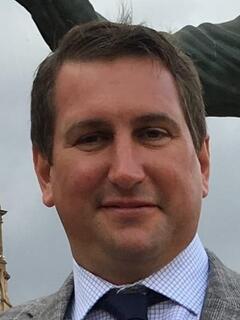
Mr Darren Nicholls
Sales Director – UK, Ukraine, Middle East and Australia, CRFS Ltd
Presentation:
One Sensor, Many Missions: RF Convergence for Countering Threats in the Indo-Pacific
Abstract:
From PLA drone incursions over Taiwan's ADIZ to GPS jamming in the South China Sea and North Korean RF interference along the DMZ, spectrum in the Indo-Pacific is under constant pressure. Overlapping tensions and diverse conflict types—commercial, asymmetric, and peer-level—create a uniquely complex operational environment.
This highly connected and disparate electromagnetic battlespace is congested, contested, and constrained. To succeed in such a complex theatre, where denial, deception, and drone warfare escalate daily, spectrum operations must adapt fast and move away from stovepiped systems.
This presentation introduces a scalable, modular, plug-and-play model for electronic warfare: an ecosystem of passive RF sensors, built on COTS technology and deployable across fixed sites, mobile assets, and unmanned platforms (USV, UGV, UAVs). These sensors support multiple users for multiple missions across multiple domains: EW teams defending against drone swarms, SIGINT analysts monitoring adversary comms, and spectrum managers deconflicting allied emissions—simultaneously and in real time.
An RF sensor network helps address three critical challenges in EMSO: reducing the operator burden, the number of personnel, and the required training. These sensors are interoperable across joint and coalition forces, and they are also resilient in GNSS-denied environments, with proven effectiveness in areas where satellite navigation is jammed, such as the Philippines' EEZ or Taiwan Strait. When paired with Human Machine-Teaming (HUM-T), they enable persistent, cost-effective coverage in hard-to-reach or high-risk zones.
By deploying shared RF infrastructure ahead of time, allied forces can act quicker, reduce their electronic footprint, and enable a distributed response across domains and partners.
Biography:
Darren Nicholls has specialised in RF for the Aerospace and Defence sector throughout his career. Specialising in EW, Radar, Underwater and Satellite communications, Darren intuitively understands the customer problem and draws upon his experience to deliver the ideal solution to solve it.
He is also on the board of directors for the AOC UK Chapter and holds a BEng (Hons) in Electronic communications. Darren is currently responsible within CRFS as Sales Director for UK, Ukraine, Australia, New Zealand and previously US forces in Europe and Africa and Middle East.
-

Mr Alex Parkinson
Senior Manager Cybersecurity, EY Australia
Presentation:
Making It Work Together - Integrating EW Applications and Systems into Secure ZT/MLS Environments
Abstract:
As electronic warfare (EW) capabilities evolve, the integration of EW software applications and systems into secure ICT environments is critical to achieving Coalition Convergence outcomes. This session will delve into advanced security frameworks of Zero Trust (ZT), Data Centric Security (DCS), and Multi-Level Security (MLS), exploring their impact on the integration of EW technologies and software applications into military deployed information environments.
We will begin by outlining the fundamental principles of ZT, DCS, and MLS, emphasizing their roles in safeguarding sensitive military systems against evolving cyber threats. Key topics will include the challenges of implementing EW applications in ZT environments, the importance of data-centric approaches to protect critical information, and strategies for achieving compliance with MLS requirements while maintaining operational effectiveness.
Biography:
Alex Parkinson is Senior Manager Cyber Security at EY Australia; joining the EY Defence and National Security team after 12 years as senior cybersecurity architect at Thales Australia.
Alex's qualifications include a Master of Science (Internetworking), a Graduate Diploma in Applied Finance and CISSP, CRISC and SABSA Practitioner (SCP) professional certifications. Alex has over 30 years of experience in understanding and dealing with complex systems and organisations in multiple sectors, including 13 years in Australia Regular Army (RASIGS), Financial Services & Trading sector, Defence and National Security sector and Mission Critical Engineering programs.
Alex's achievements include being the cybersecurity lead for major space systems tenders (SouthPAN SBAS and JP9102 MILSATCOM) and being systems security architect for the CMATS / OneSky project (a joint civil military national ATM system for Australia).
Alex is motivated by the big-picture outcome, rather than just a short-term goal or number. He is attracted to understanding and solving the 'difficult problem'. Being able to successfully apply cybersecurity to real world mission critical systems is an example of this.
-
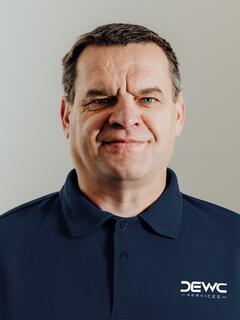
Dr Andrew Piotrowski
Principal Consultant, DEWC Services
Presentation:
Development and Validation of Countermeasures for Uncrewed Aerial Systems (UAS): How Many Tests Do We Need?
Abstract:
The widespread use of Uncrewed Aerial Systems (UAS) across civilian and military domains has been accompanied by their increasing misuse, creating significant risks to critical infrastructure. In response, a range of counter-UAS (C-UAS) systems has emerged, such as radio frequency (RF) jamming, kinetic interceptors, and directed energy weapons. However, Defence faces major challenges in testing, evaluating, and procuring these systems due to the absence of standardized, comparable performance assessment frameworks.
We propose a systematic, modular methodology that decomposes C-UAS systems into four testable subsystems: (1) detection – identifying UAS across size classes and altitudes; (2) tracking and identification – maintaining continuous surveillance with positional accuracy; (3) neutralization – delivering effects via electronic countermeasures, kinetic interceptors, or directed energy weapons; and (4) integration – valuating latency and coordination from initial detection to engagement.
Our approach establishes discrete test protocols for each subsystem, followed by integration of the results through system-level validation scenarios. This modular framework enables:
• Systematic performance decomposition into measurable parameters
• Independent validation of subsystem capabilities before integration
• Identification of performance bottlenecks within the kill chain
• Scalable test design from laboratory to operational environmentsA Hardware-in-the-Loop (HWIL) RF jamming testbed is used to illustrate the Countermeasure Development, Validation, and Verification (CMD&V) process, detailing representative test configurations and performance metrics. Ongoing challenges include environmental variability, complex electromagnetic conditions, and balancing test repeatability with operational realism.
The proposed framework supports a repeatable, scalable, and evidence-based testing process, enabling informed acquisition decisions and accelerating the delivery of effective C-UAS capabilities.
Biography:
Currently Principal EW Systems Engineer at DEWC Services. Andrew has led defence work on risk reduction activities and research studies for Electronic Countermeasure System, High Power Microwave, vulnerabilities of COTs communication devices, communication, and radar ECM techniques.
Andrew's career spans development, design and testing of Radio Frequency Countermeasures for Communication and Radars, their testing, vulnerability assessment and testing of various communication and radar systems, development High Power Microwave and Electromagnetic technologies for military and commercial applications.
Andrew is recipient of the 2018 Minister of Defence for Achievements in Defence Science award and several DST achievements awards. His contribution to ADF is recognized with several commendation letters. He holds PhD in microwave engineering from RMIT and MEng in Telecommunication from Wroclaw TU.
-

Mr Aleksander Pollok
Student, University of Adelaide
Presentation:
Kinetic Interceptor Drones as a Hard-Kill Complement to Electronic Warfare in Counter-UAS Operations
Co-Presenter:
Mr Oskar JakubowskiAbstract:
The widespread use of low-cost commercial UAVs for reconnaissance, delivery, or attack has outpaced many soft-kill Electronic Warfare (EW) countermeasures. RF jamming, GPS spoofing, and directed energy remain primary C-UAS tools, yet autonomous, fibre optic guided, or RF-silent drones increasingly render them ineffective.
This presentation examines kinetic interceptor drones, autonomous platforms designed for direct physical collision, as a necessary hard-kill layer that complements EW strategies. These systems exploit EW sensors for initial cueing, then transition to jam-resilient AI/vision terminal homing to ensure engagement in contested electromagnetic environments.
Key design drivers include
-Higher terminal speeds to deliver 5-10x the target's kinetic energy (KE=1/2mv2)
-Reinforced airframes for reliable hit-to-kill
-Pursuit guidance optimised for maximum closing velocityBy pairing EW soft kill with kinetic hard-kill, hybrid C-UAS architectures improve resilience, cost-effectiveness, and collateral safety in high- threat scenarios. The talk provides engineering rationale and performance estimates for EW professionals seeking spectrum-dominant yet physically decisive counter drone solutions.
Biography:
Aleksander Pollok is a fifth-year student at the University of Adelaide, completing a double degree in Mechanical Engineering and Finance & Banking, and is set to graduate in March 2026. His engineering focus is on advancing Australian sovereign C UAS defence capability. Combined with his Finance degree and professional experience in operations management, he aims to innovate and apply engineering solutions to commercial contexts.
Aleksander's academic focus has been on design and manufacturing, with his engineering degree majoring in materials and manufacturing. He gained hands-on experience through the Adelaide University Motorsport Team, where he contributed to the design, fabrication, and racing of an electric open-wheel race car. For his final year project, he worked on developing a C UAS kinetic interception drone, applying advanced manufacturing techniques to transform concepts into practical solutions. These experiences reflect his passion for solving real-world challenges through innovative engineering.
In addition to his academic achievements, Aleksander has extensive professional experience as Operations Manager at P&R Electrical Wholesalers. He oversees workplace health and safety, quality assurance, inventory management, and leads teams across the companies' branch network. This experience has strengthened his ability to manage complex systems, streamline processes, and lead teams, valuable skills which complement his technical expertise and reinforce his passion for entrepreneurship and business leadership.
Aleksander is passionate about innovation and the intersection of engineering and business. His career goals include contributing to Australia's sovereign defence capabilities, advancing additive manufacturing technologies, and driving scalable solutions through collaboration between industry and academia.
-

Mr Cameron Thevenin
Strategic Business Developer - Radar & Electronic Warfare, NI
Presentation:
From One-on-One to Many-on-Many: Modernizing EMSO Validation for Complex EW Environments
Abstract:
Electromagnetic Spectrum Operations (EMSO) system validation presents significant challenges due to the complexity and dynamic nature of modern electronic warfare environments. Traditional validation approaches often struggle to replicate realistic operational conditions, particularly when scaling beyond simple one-versus-one engagements. Key obstacles include the need for high-fidelity threat emulation, synchronization across multiple platforms, and cost-effective scalability for many-on-many scenarios. Additionally, hardware-centric solutions can be inflexible and resource-intensive, limiting iterative testing and rapid adaptation to evolving threats.
Commercial Off-The-Shelf (COTS) software-defined instruments offer a transformative approach to these challenges. By leveraging modular, programmable architectures, COTS solutions enable rapid configuration changes and integration with existing test frameworks. Their software-defined nature supports dynamic waveform generation, real-time signal analysis, and automated scenario orchestration, reducing reliance on bespoke hardware. This flexibility allows validation environments to scale efficiently from basic one-on-one interactions to complex, many-on-many engagements, while maintaining fidelity and repeatability. Ultimately, adopting COTS software-defined instruments enhances agility, reduces cost, and accelerates EMSO system validation, ensuring readiness against increasingly sophisticated electromagnetic threats.
Biography:
Cameron Thevenin is a seasoned technology strategist specializing in radar and electronic warfare solutions. As Strategic Business Developer at NI, Cameron drives innovation and partnerships that enable defence organizations to modernize their test and validation capabilities.
With deep expertise in electromagnetic spectrum operations and advanced test architectures, he focuses on delivering scalable, software-defined solutions that accelerate mission readiness in complex EW environments. Cameron's work bridges cutting-edge technology with operational needs, helping customers achieve agility, cost efficiency, and superior performance in an era of rapidly evolving threats.